
Window Dressings: Curtains, Blinds and Choosing the Right Style for Your Home
Window dressings are often one of the final elements considered in an interior design project, yet they play a crucial role in how a room looks and feels. Well-chosen curtains, blinds or other window treatments can soften architecture, control light and add texture, colour and warmth to a space.
Because window treatments combine both practical and decorative functions, choosing the right option requires careful consideration. Light levels, window shape, ceiling height, fabric choice and budget can all influence which solution works best.
This guide explains the key options for curtains, blinds and curtain headings, along with practical advice on choosing between curtain tracks and poles.
Curtains vs Blinds: Which Is Right?
The two most common window dressings are curtains and blinds, and many homes benefit from a combination of both.
Blinds
Blinds are often the most practical solution where space is limited or where full-length curtains are not possible. For example, they work well where radiators, sinks or furniture prevent curtains from hanging freely.
Blinds can also be a more cost-effective window treatment and are frequently used in kitchens, bathrooms and contemporary interiors.
Roman blinds, roller blinds and Venetian blinds are among the most common options.
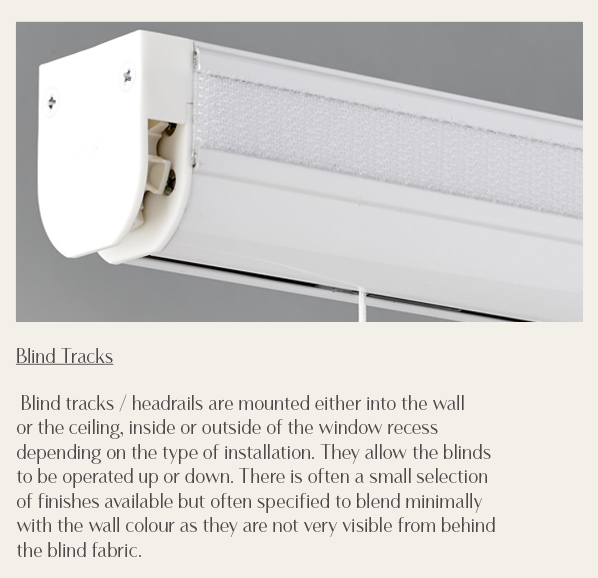
Blinds can be installed inside the window recess for a clean architectural look, or outside the recess to help block more light. However, most blinds still allow a small amount of light to enter around the edges, which means they rarely achieve complete blackout on their own.
For this reason, blinds are often paired with decorative curtains for additional softness and light control.

Roman Blinds - outside recess
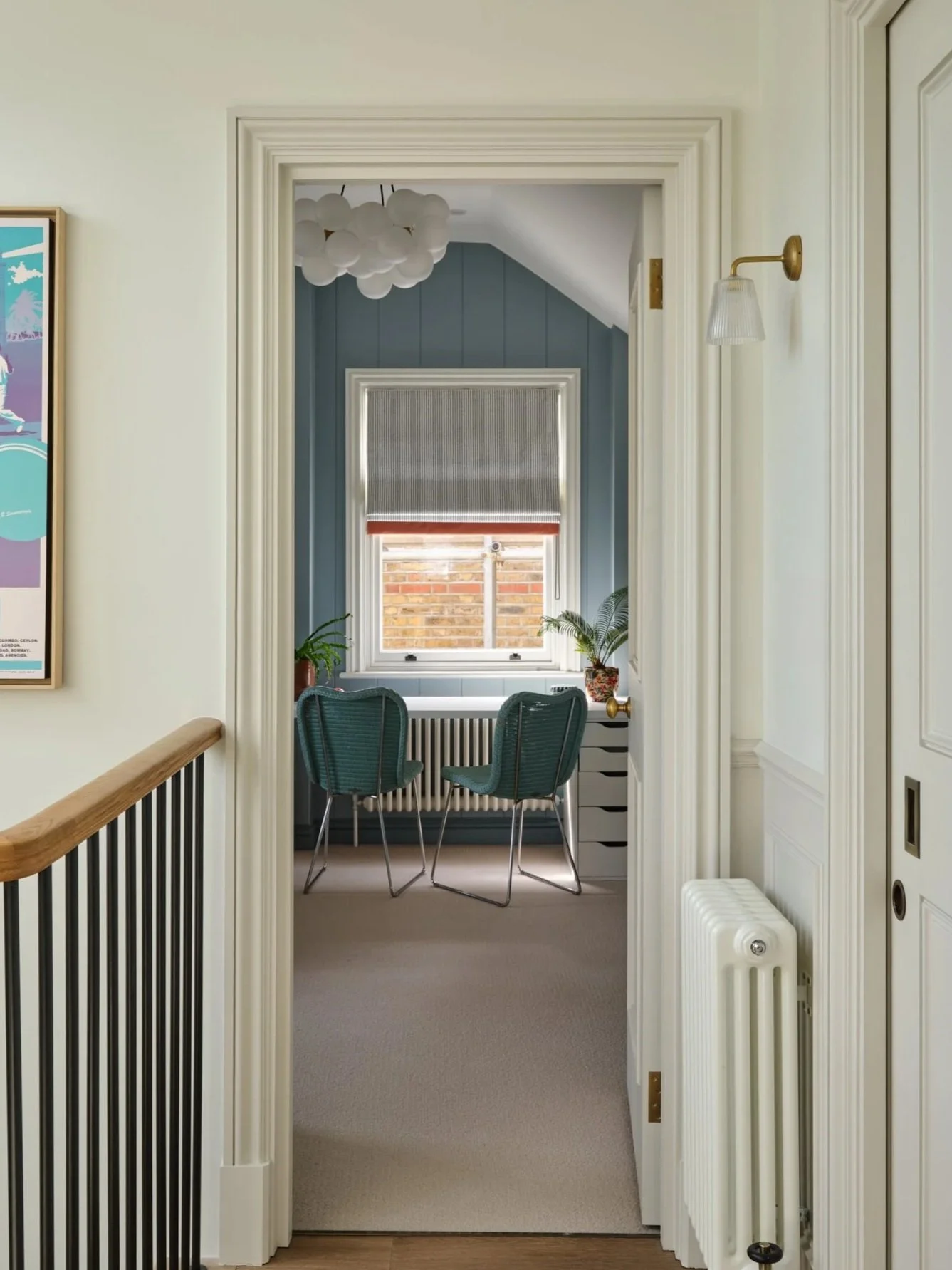
Roman Blinds - inside recess

Curtains
Curtains bring softness and visual balance to a room and can dramatically change the atmosphere of a space.
Where possible, we generally recommend full-length curtains, even if the window itself is smaller. Full-length curtains tend to feel more elegant and help elongate the height of the room.
Our preferred curtain length is what we call “kissing the floor”, where the hem lightly touches the floor by around 2–3 cm. This gives a tailored finish without the curtain appearing too short.
For relaxed interiors or lightweight fabrics, a puddle length (where the fabric pools slightly on the floor by around 4–6 cm) can create a softer look.
Curtains can also help improve insulation, reduce glare and enhance acoustic comfort within a room.

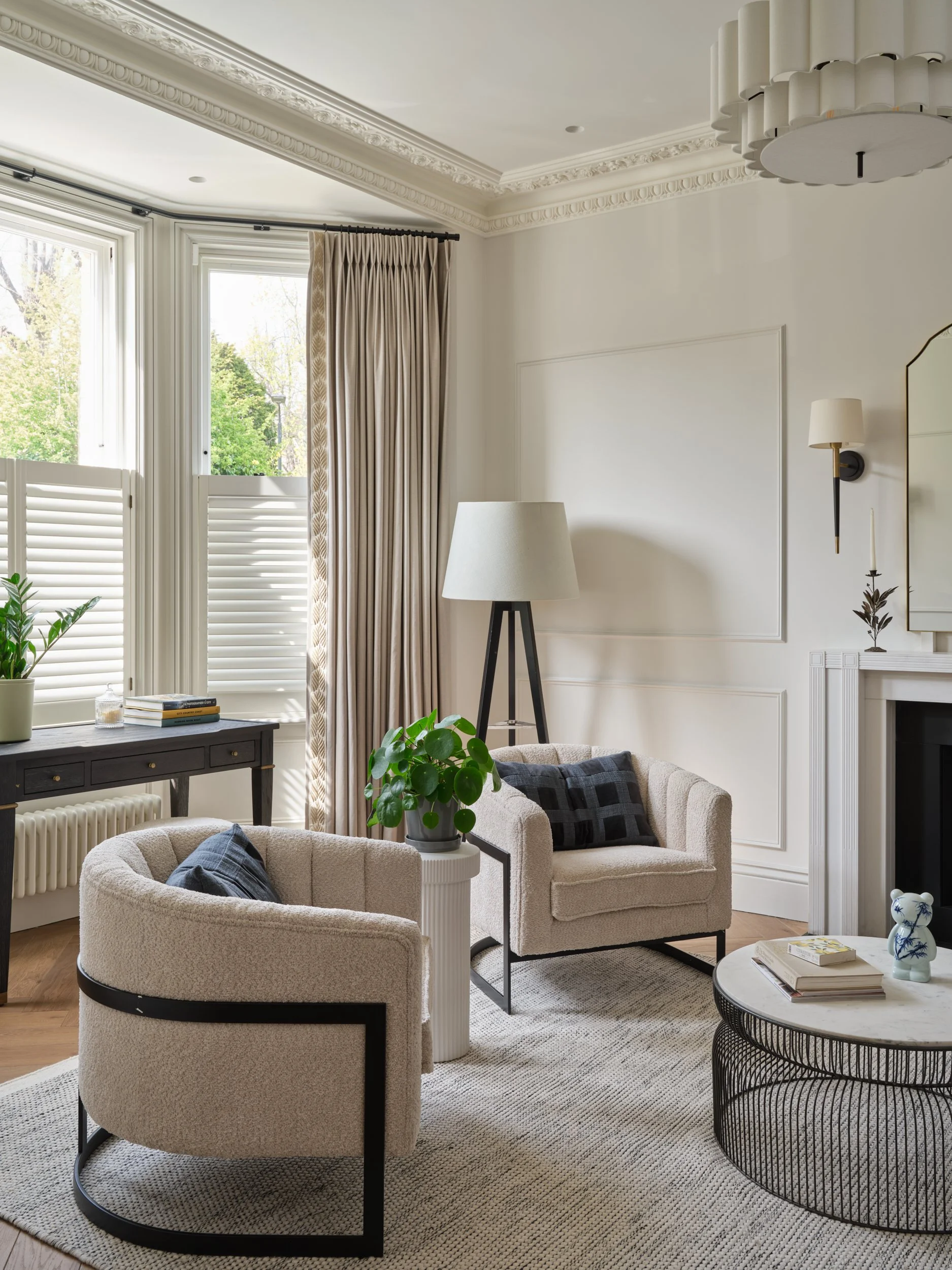
Kissing the floor length curtains
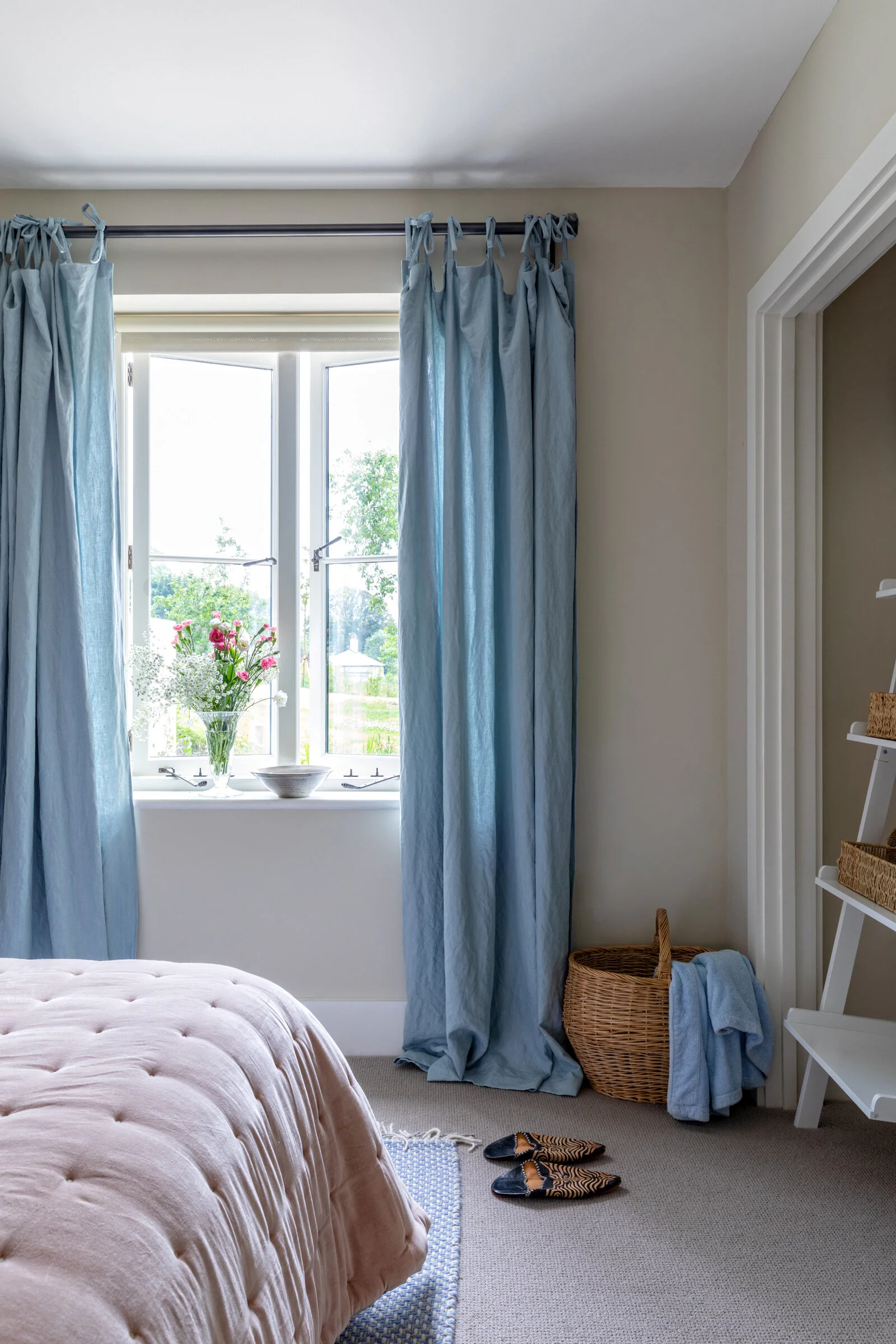
Puddle length curtains
Curtain Poles vs Curtain Tracks
Another important decision when designing window dressings is whether to use a curtain pole or curtain track.
Curtain poles
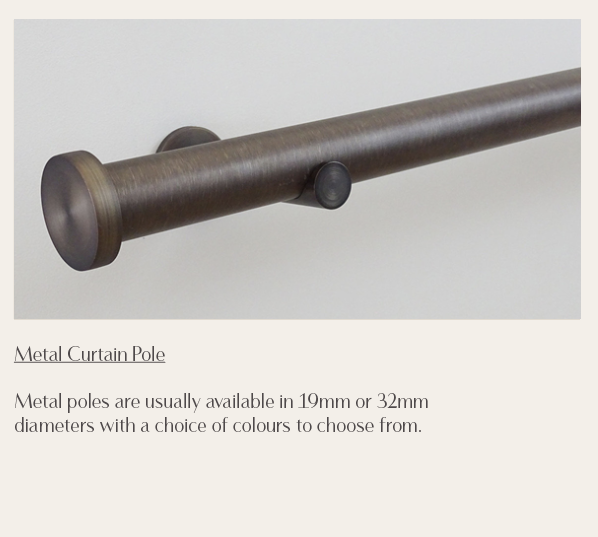
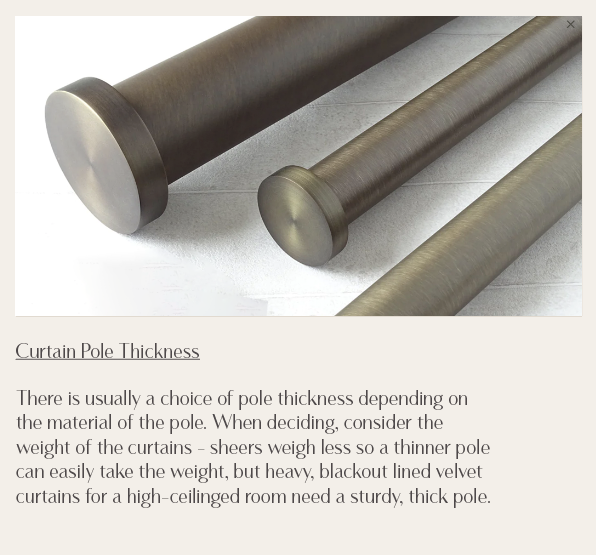
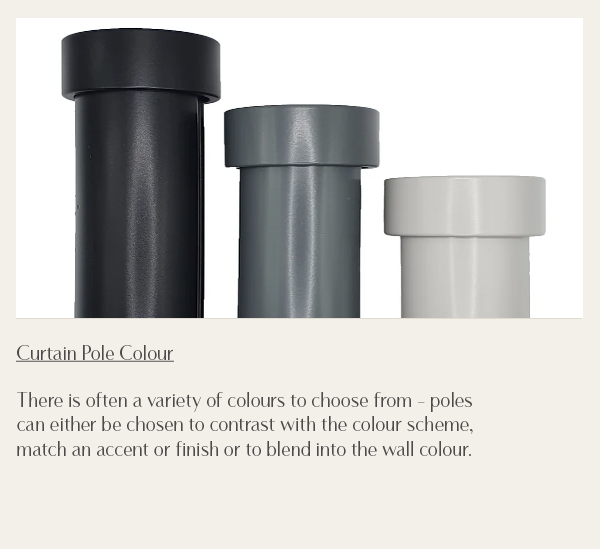
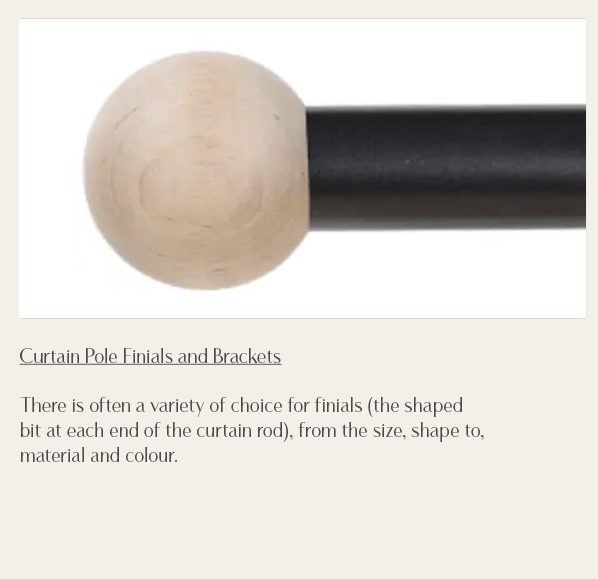
Curtain poles are visible decorative elements and often become part of the overall interior design. They are available in a wide range of finishes including brass, black metal, wood and painted finishes.
Poles work particularly well in traditional interiors or bedrooms where the curtain heading and hardware are intended to be seen.
However, poles can sometimes allow a small gap at the top of the curtain, which means a little light may enter the room.
Another important decision when designing window dressings is whether to use a curtain pole or curtain track.
Curtain tracks
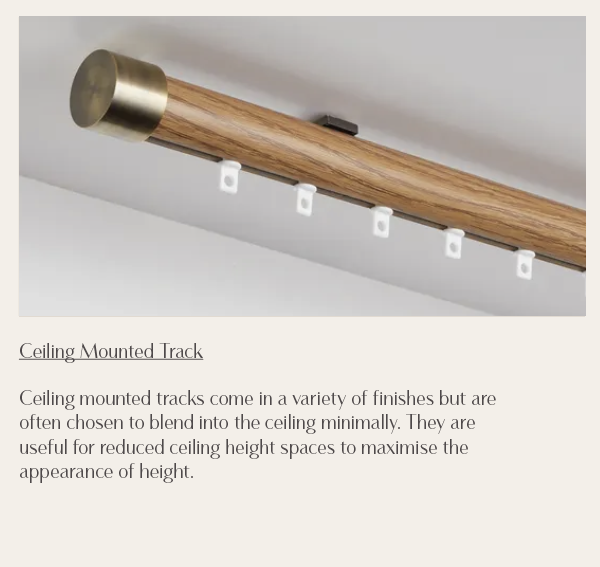
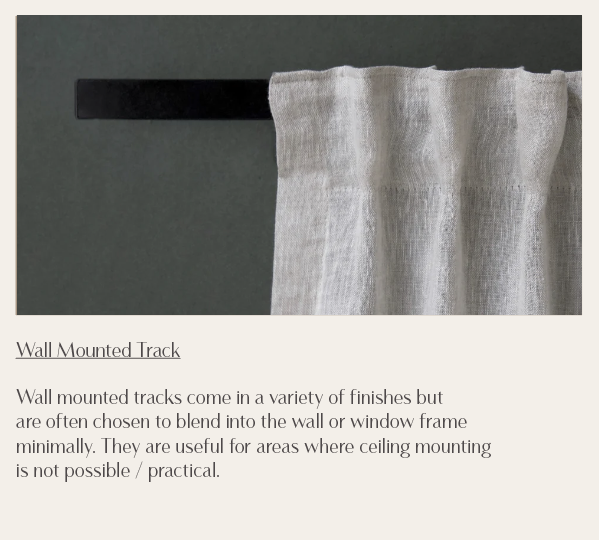
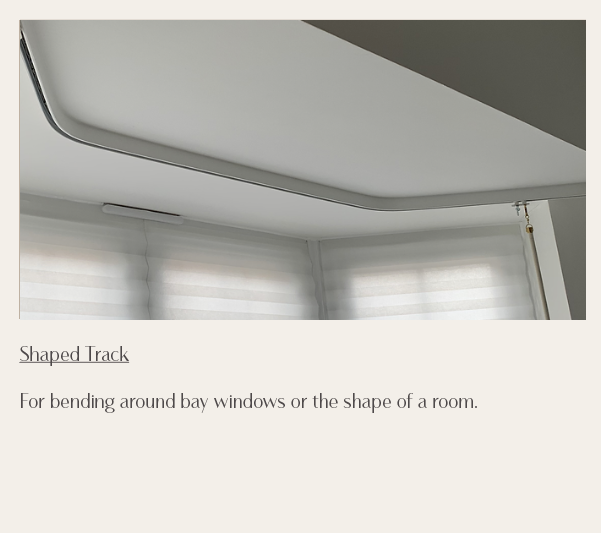
Curtain tracks are more discreet and are often hidden within a ceiling recess or mounted close to the ceiling line. This allows curtains to hang in a very clean, architectural way.
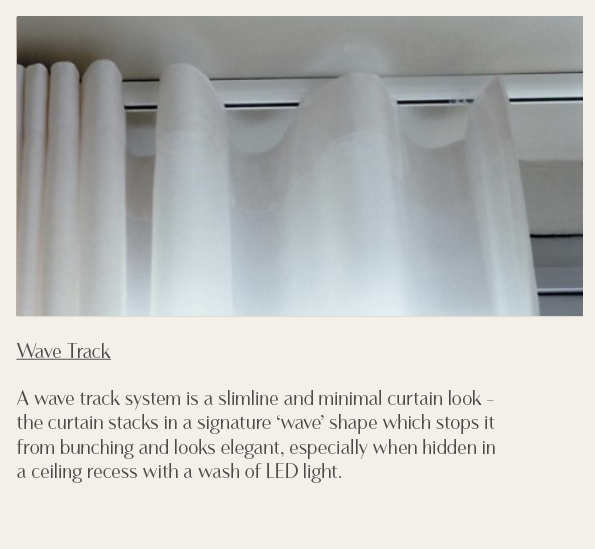
Tracks are also essential for certain curtain headings such as wave curtains, which create a soft continuous ripple in the fabric.
Because tracks sit closer to the ceiling and allow curtains to overlap more fully, they can provide better light control and blackout performance.
For contemporary interiors, ceiling-mounted tracks often create the most elegant and minimal result.
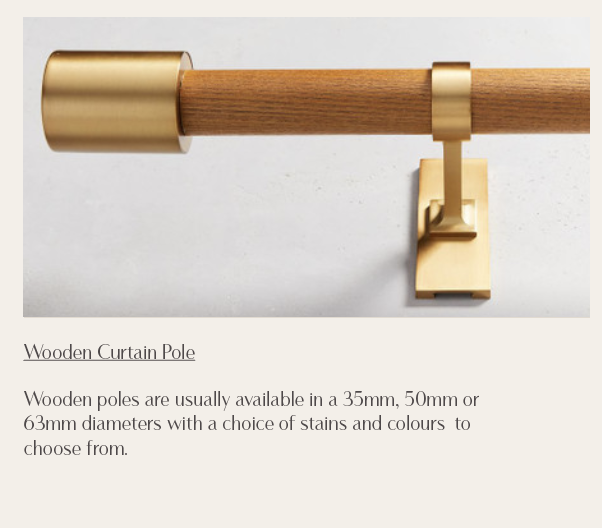
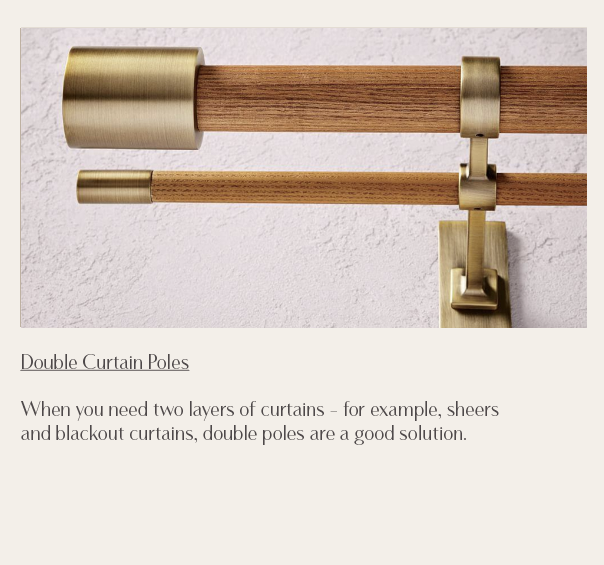
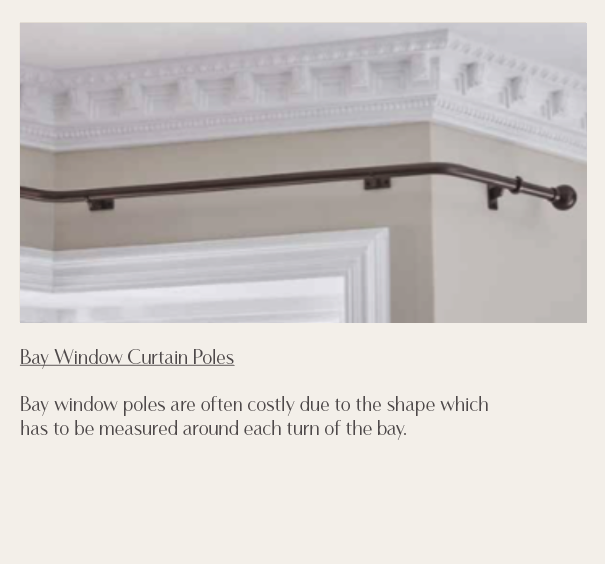
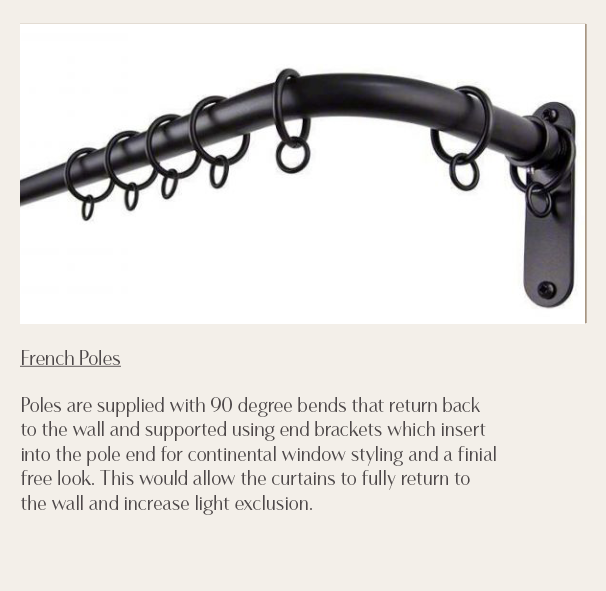
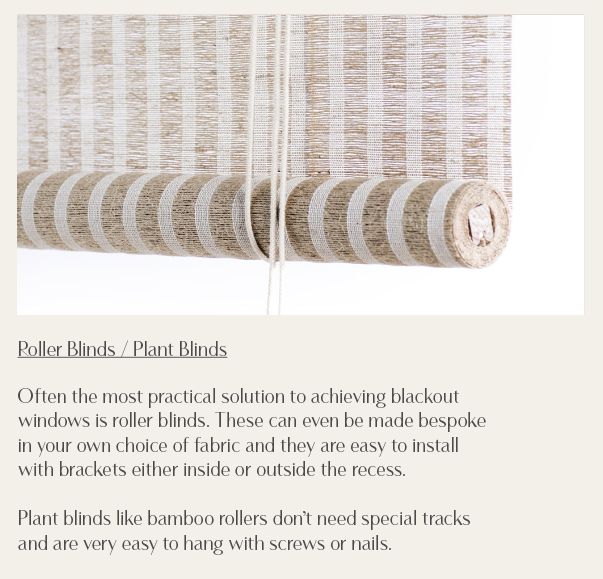
Curtain headings explained
Curtain headings determine how the fabric hangs and how the curtain folds when opened. The choice of heading influences both the style of the curtain and the amount of fabric required.
Rather than listing every possible heading style, these are the most commonly used options in residential interiors.
Wave heading
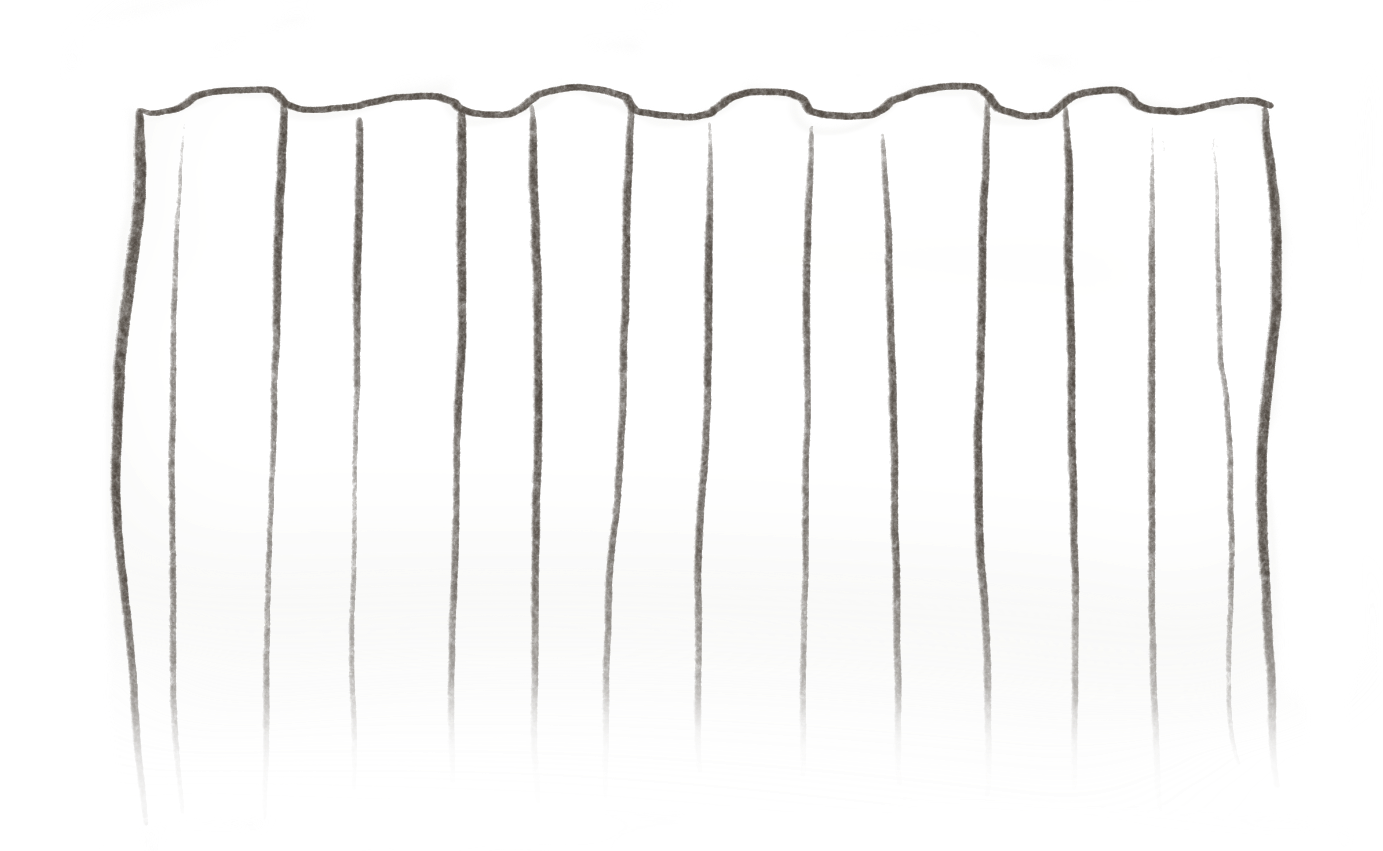
Wave curtains create a soft, flowing ripple effect and are typically used with a curtain track system. They are particularly popular in modern interiors and work well with sheer fabrics.
Wave curtains stack neatly and allow a good amount of light into the room when open.
Eyelet heading
Easy to install, easy to operate, involves little or no dressing as eyelet curtains form lovely large columns of fabric which fall into soft pronounced folds. Needs less fullness than gathered headings which can be more cost effective. When drawn back, this style folds tightly and doesn’t cover window opening as much as other styles. Suitable for use with a curtain pole.

Tie Tops
Tie curtains use fabric strips that are tied in a decorate knot/bow to attach to a pole, the same fabric can be used or a contrasting one. Informal and delicate, they make a great match for bedrooms. The curtain pole needs to be thin enough to fit through the loops; opening and closing this curtain can be harder where there is fabric resistance and friction. Suitable for use with a curtain pole.

Tab Tops
Tab curtains use fabric loops to attach to a pole, the same fabric can be used or a contrasting one. Informal and stylish, they make a great match for bedrooms. As with tie tops, the curtain pole needs to be thin enough to fit through the loops and opening and closing this curtain can be harder where there is fabric resistance and friction. Suitable for use with a curtain pole.

Slot Heading
An informal gathered look with extra height as the top which can creates an illusion of a taller ceiling height. This style is difficult to open and close, making it best suited as a dress curtain. Can be designed in a standard open position but also looks fantastic held back using Italian stringing or tiebacks. Suitable for use with a curtain pole.

Gathered Heading
The term ‘gather’ refers to the extent to which the fabric is bunched together (with a flat curtain having effectively zero gather). A ‘gathered’ heading tends to be loosely bunched which create an unstructured and casual look, ideal for cosy bedrooms and living areas. This heading style is extremely versatile, working well with printed or and plain fabrics in both sheer and unlined curtains. Suitable for use with a curtain pole.

Pencil Pleat
Pencil pleats are a neat and elegant type of curtain heading. The name comes from the tightly packed folds at the top of the curtain that resemble a row of pencils. Suitable for use with a curtain track or pole.


Box Pleat
A smart and refined style that features structured, wide pleats. This style is difficult to open and close, making it best suited as a dress curtain. Can be designed in a standard open position but also looks fantastic held back using Italian stringing or tiebacks. Suitable for use with a curtain track or pole.
Pinch Pleats
Pinch pleat is a decorative heading for curtains, suitable for all fabrics. Pinch pleats use more fabric and are fuller than pencil pleats. The pleats are hand-sewn in and permanently fixed for more luxurious, tailored look. Suitable for use with a curtain track or pole.

Double Pinch Pleat (our favourite!)

Triple Pinch Pleat
Top Pinched Pleat
A tailored, elegant take on the Double and Triple Pinch Pleats. The tapered top gives the curtain a more refined look while maintaining beautiful draping folds. This style stacks back more tightly than Double and Triple Pinch Pleats, allowing more light in through the window opening. Suitable for use with a curtain track or pole.

Goblet Pleat
This decorative heading, which features a line of wineglass-shaped details, is ideal for more traditional and formal interiors. It works particularly well with thick fabrics or silks and it can be used with either poles or tracks. Goblets can be formal/stiff or soft depending on the style and can have bows, knots or other small trims at the base of each goblet and/or rope joining the goblet.
This style will take up more space and when drawn, will have a wider stack back than other headings which could let less light through the window opening. Suitable for use with a curtain track or pole.

Cartridge Pleat
The Cartridge pleats are a hand formed style that resemble a more relaxed Goblet. The Narrow Cartridge Pleat has thinner tubes of fabric which appear similar to a Wave Heading. Suitable for use with a curtain track or pole.

Cartridge Pleat

Narrow Cartridge Pleat