
Bespoke Upholstery, Soft Furnishings & Headboards
Bespoke upholstery and soft furnishings bring a layer of softness and individuality that is difficult to achieve through off-the-shelf pieces. From sofas and headboards to cushions and lampshades, these elements are often where comfort and craftsmanship meet, and where small design decisions have a noticeable impact on the finished interior.
Unlike many other items within a scheme, bespoke pieces are made to order and cannot be returned. For this reason, the design and approval process is particularly important, and understanding how these items are developed helps ensure the final result feels considered and appropriate.

Bespoke furniture and upholstery
Custom-made furniture, including sofas, ottomans and dining pieces, allows for a level of tailoring that goes beyond standard retail options. Proportions can be adjusted to suit the space, finishes selected to complement the wider scheme, and comfort levels refined to suit individual preference.
Because these pieces are made specifically to order, it is important to review all elements in detail before production begins. This includes not only the fabric selection, but also details such as piping or edging, leg finishes and the internal construction of the piece. The choice of seat filling, whether foam, feather or a combination, will significantly affect both the feel and the long-term performance of the furniture.
Where possible, visiting a showroom to trial similar models is advisable, particularly for sofas where comfort is subjective. For fully bespoke pieces made by specialist joiners or upholsterers, it can also be beneficial to visit the workshop during production. This allows the opportunity to test the seat construction before upholstery is completed and make adjustments to firmness if required.
Soft furnishings and finishing details
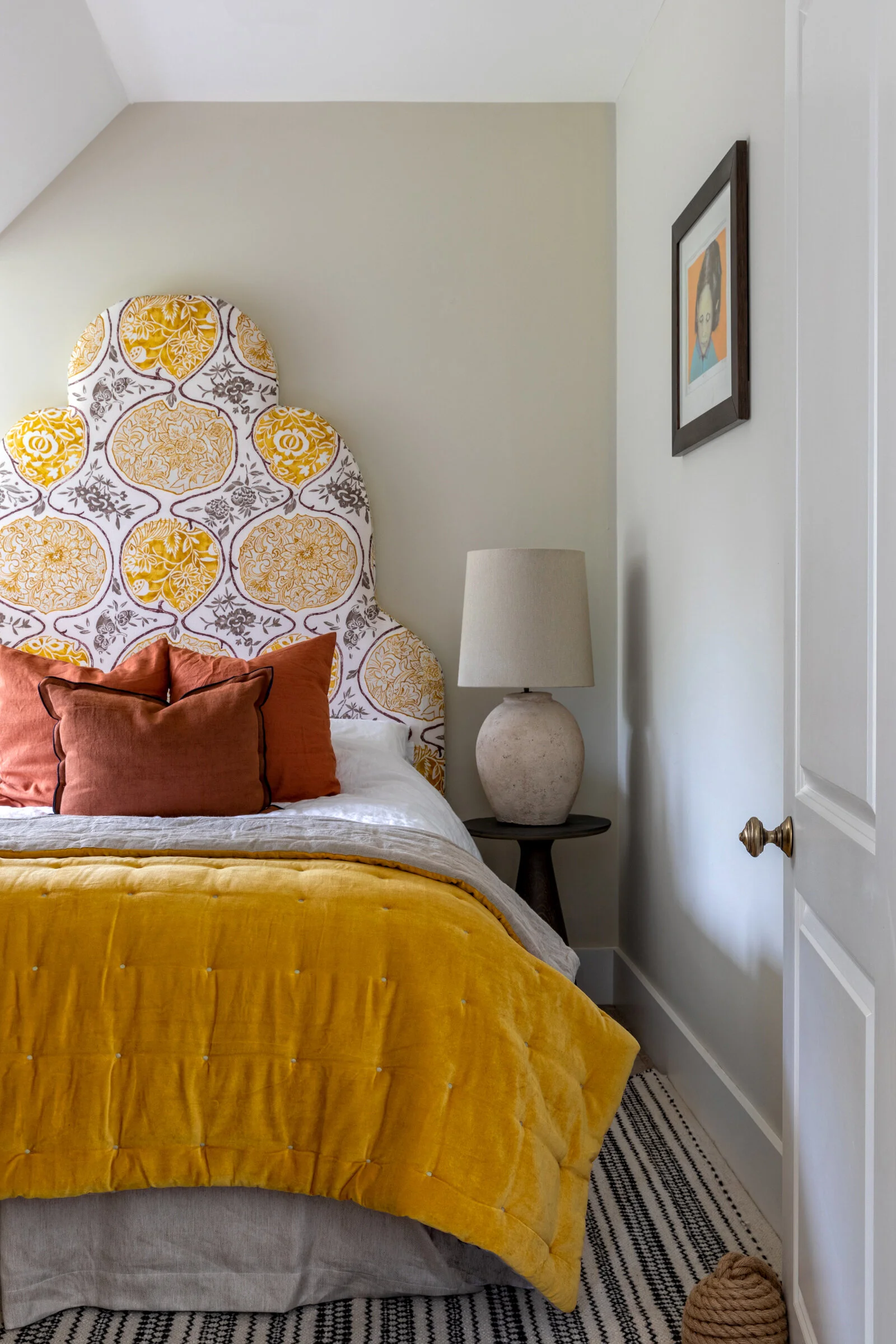
Smaller bespoke items such as cushions and lampshades play a quieter but equally important role in shaping the overall feel of a space. Their success often lies in proportion, materiality and subtle detailing.
Cushions can be tailored in size and shape, with the option to vary fabrics between the front and reverse. Details such as piping or trims introduce contrast or cohesion, while the choice of filling influences both comfort and appearance. Feather fillings offer a softer, more relaxed look, while foam provides structure and consistency.
Lampshades similarly benefit from careful consideration. Proportion, fabric selection and internal finishes all affect how light is diffused and how the piece sits within the room. These are often final-layer elements, but they are most successful when considered early as part of the wider scheme.
As with all bespoke items, these pieces are made to specification and cannot be returned, so it is important that all details are reviewed and approved in advance.

Bespoke headboards
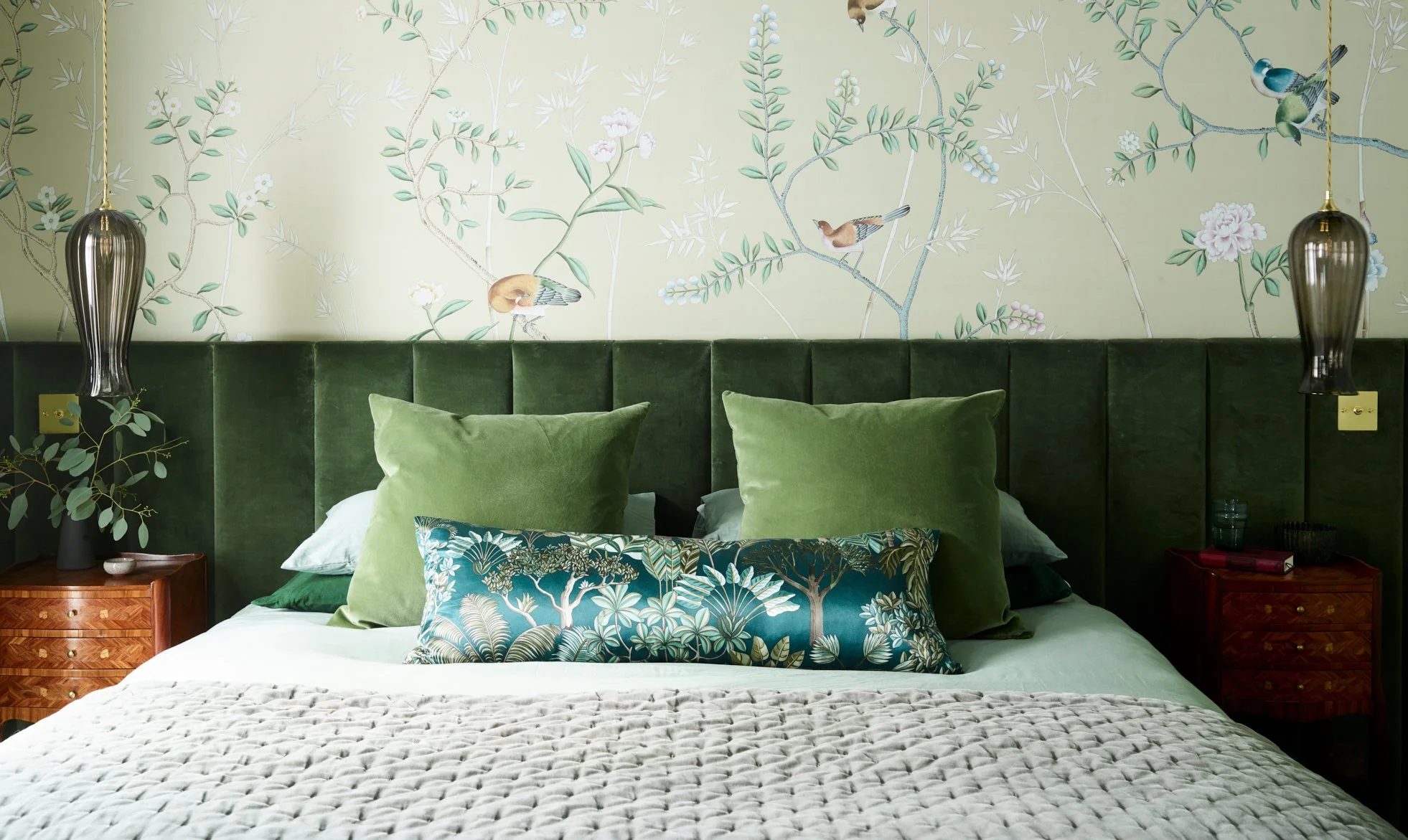
A bespoke headboard can act as a focal point within a bedroom, introducing both scale and softness. Unlike standard beds with integrated headboards, bespoke designs are typically made as separate pieces and installed independently of the bed base.
They are usually constructed from a solid backing, such as MDF, layered with foam and wadding before being upholstered in the chosen fabric. This allows for a wide range of shapes and detailing, from simple upholstered panels to more decorative designs incorporating piping, studs or buttoning.
Dimensioning is an important part of the design. The width is typically set slightly wider than the bed to create a balanced visual frame, while the height is determined by both the design intent and the combined height of the bed base and mattress. Mattress depth should always be confirmed in advance to ensure the proportions feel correct once installed. Depth is generally kept relatively slim to maintain a clean profile.
Where headboards incorporate features such as integrated lighting or cut-outs for sockets and switches, dimensions should be confirmed on site prior to manufacture to ensure alignment with the final electrical layout.
Installation considerations
Unlike fitted joinery, installation of bespoke upholstered pieces is often carried out by the contractor rather than the maker. Headboards, in particular, require secure fixing to the wall and should be installed using appropriate methods, such as heavy-duty brackets or timber battens designed to support the weight of the piece.
Where electrical cut-outs are included, coordination with the contractor is required to ensure cables are correctly positioned and fittings are neatly integrated with the headboard.
As with many elements towards the end of a project, installation should take place once the room is largely complete, with final wall finishes in place. Careful handling and accurate fixing are essential to achieve a clean and secure result.
Final considerations
Bespoke upholstery and accessories are defined by their detail. Because they are made specifically for each project, the design decisions made early on — from fabric and trim to filling and proportion — have a direct impact on the final outcome.
While this level of customisation requires more upfront consideration, it allows for a result that feels cohesive and tailored to the space. When carefully specified, these elements not only enhance comfort but also bring a sense of refinement and individuality that elevates the overall scheme.
