
How to Hang Artwork in Your Home: 5 Interior Designer Tips
Artwork plays an important role in creating interiors that feel personal and complete. The right piece of art can bring colour, character and emotional depth to a space, often becoming the focal point of a room.
However, knowing how to choose, place and frame artwork can sometimes feel daunting. From selecting the right scale to deciding how to arrange a gallery wall, thoughtful placement can make a significant difference to how artwork is experienced within a home.
At Pia Design we often help clients incorporate existing art collections into new interiors, or work with art consultants to source pieces that complement the design scheme. If clients already own artwork but need help deciding where it should go, we also offer art hanging and styling consultations to bring everything together.
Here are a few of our favourite interior designer tips for hanging artwork in the home.
1. Choose artwork that connects with the space
The most successful interiors often begin with pieces that have meaning to the homeowner. Artwork should reflect your personality and interests rather than simply filling an empty wall.
When selecting artwork, consider the colours, textures and atmosphere of the room. Art can either complement the palette of a space or provide a deliberate contrast that adds visual interest.
If you already own artwork you love, this can be a wonderful starting point for the interior design scheme. Designing a room around meaningful pieces often results in interiors that feel more layered, authentic and personal.
Scale is also important. Artwork that is too small can feel lost on a large wall, while oversized pieces can dominate a space. Finding the right balance between the artwork and the surrounding architecture is key.
2. Frame artwork thoughtfully
The right frame can elevate artwork and help it sit comfortably within the wider interior scheme.
In more contemporary interiors, simple frames in black, oak or natural timber often work well. In traditional settings, more decorative frames with subtle detailing or gilding can complement the character of the space.
Frames should enhance the artwork without overpowering it. Mounts can also help give smaller works more visual presence, allowing them to sit comfortably on larger walls.
Consistency can be helpful when displaying multiple artworks together, although mixing frame styles thoughtfully can also create a relaxed, collected feel.
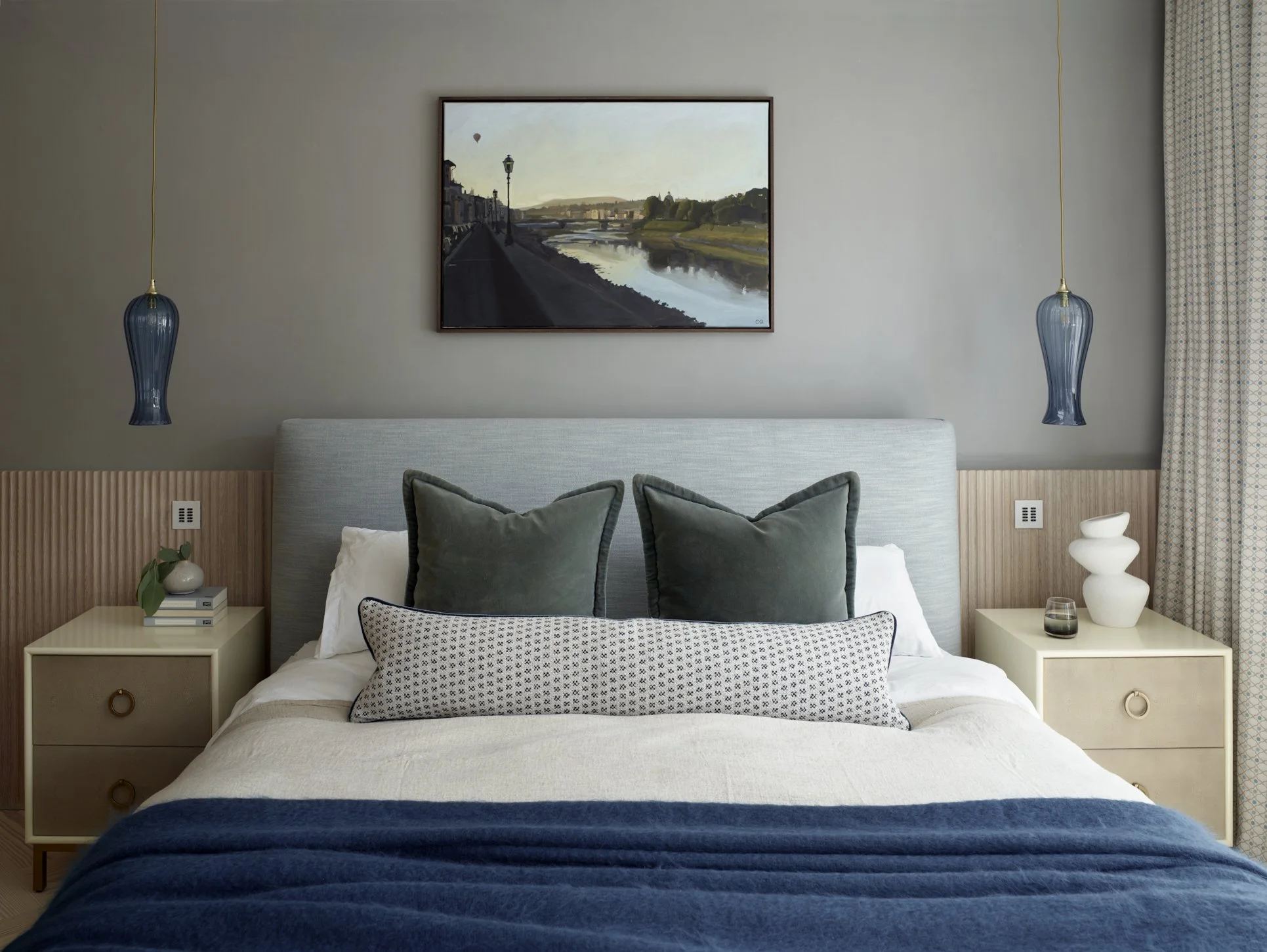
3. Consider a gallery wall
Gallery walls can be a beautiful way to display multiple artworks, photographs or prints together.
Some gallery walls are arranged symmetrically for a more structured look, while others take on a more relaxed and eclectic composition. Both approaches can work well depending on the interior style.
Before hanging anything, it is often helpful to lay the artworks out on the floor to experiment with arrangements. Aim to maintain fairly consistent spacing between pieces so the display feels intentional and balanced.
Gallery walls work particularly well in hallways, staircases and living rooms where a collection of smaller works can create visual interest across a larger surface.
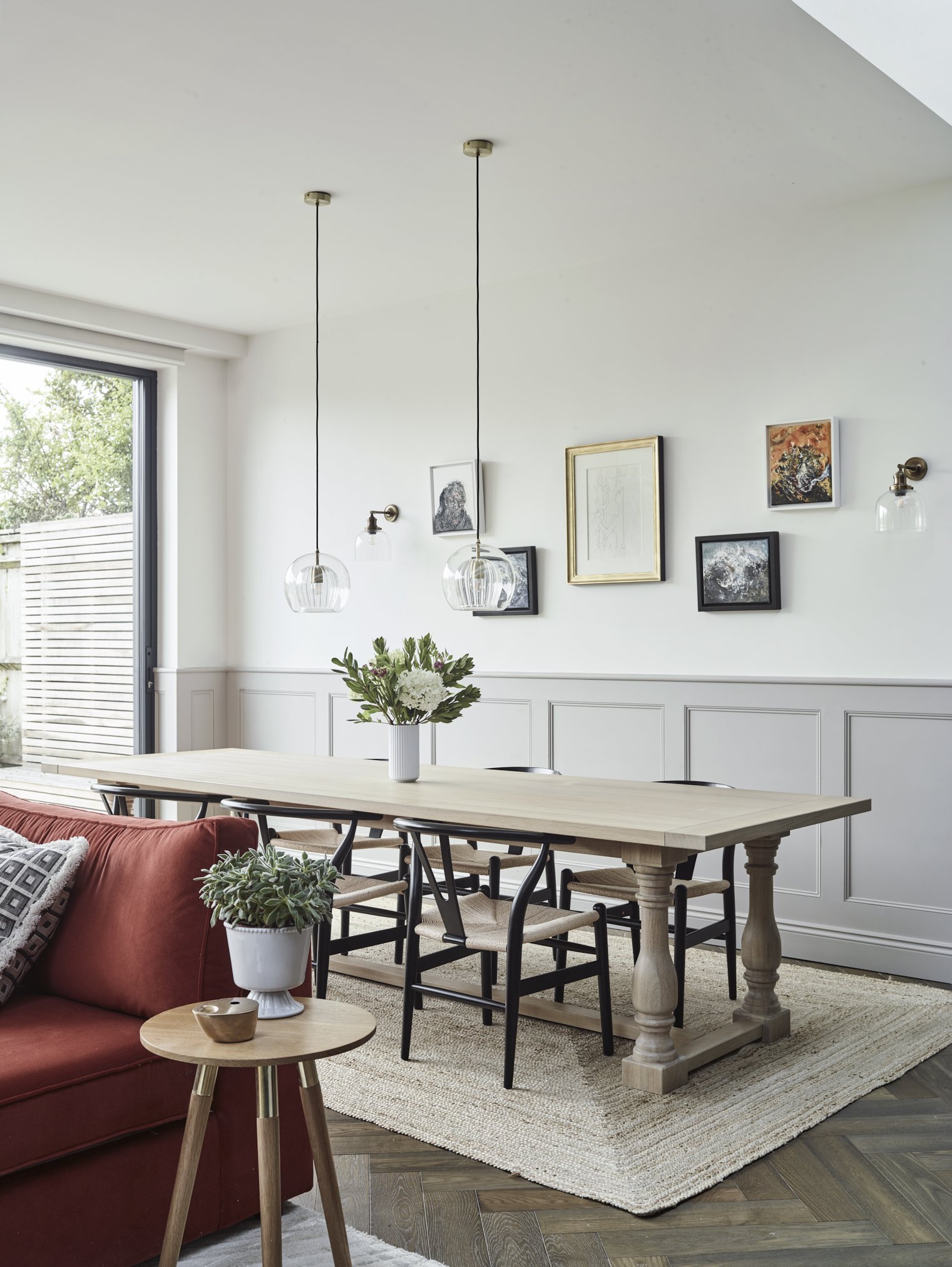
A gallery wall arrangement at our Eden House project.
4. Hang artwork at the right height
One of the most common mistakes when hanging artwork is placing it too high.
As a general rule, the centre of the artwork should sit roughly 145 cm from the floor, which corresponds with average eye level. This creates a comfortable viewing position in most spaces.
There are, however, exceptions. When ceilings are lower, it can be helpful to position artwork slightly higher to maintain proportion within the room. Above fireplaces, artwork is usually best placed somewhere between the top of the mantel and the ceiling, depending on the scale of the piece.
The key is ensuring artwork feels visually connected to the furniture or architectural elements around it.
5. Use lighting to highlight artwork
Thoughtful lighting can dramatically enhance the way artwork is experienced within a room.
Directional downlights are a subtle way to illuminate artwork without introducing a visible fixture. Alternatively, traditional picture lights can add a classic decorative detail while highlighting the artwork itself.
Lighting should complement the artwork rather than overwhelm it. Warm lighting often works best, helping colours appear natural and creating a soft, atmospheric glow in the evening.

An Andrew Martin neon heart artwork that doubles as atmospheric lighting in our Blackberry Barn project.
Creating a home that reflects your personality
Artwork is one of the most personal elements of an interior. Whether it is a single statement piece or a carefully curated collection, art helps bring individuality and emotional warmth into a home.
Thoughtful placement, framing and lighting allow artwork to feel fully integrated within the design of a room rather than simply added at the end.
If you would like help incorporating artwork into your home or creating a gallery wall that complements your interiors, Pia Design would be delighted to assist.