
Interior Lighting: How to Get the Lighting Right in Your Home
Lighting is one of the most important elements of interior design, yet it is often overlooked until the later stages of a project. Thoughtful lighting can transform a space — shaping the mood of a room, highlighting architectural features and making everyday activities more comfortable.
A well-designed lighting scheme should feel layered, flexible and natural, allowing a room to function beautifully throughout the day and into the evening.
In this guide we explore the key principles of interior lighting and share practical advice on choosing the right lighting for your home.
The role of lighting in interior design
Lighting does far more than simply illuminate a space. It helps define the atmosphere of a room, enhances materials and colours, and supports the way a space is used.
In most interiors, a successful lighting scheme combines three types of lighting:
Ambient lighting – the general background lighting of a room, often created by ceiling lights or recessed downlights.
Task lighting – focused lighting used for specific activities such as reading, cooking or applying makeup.
Accent lighting – softer lighting used to highlight artwork, architectural details or shelving.
By layering these different types of lighting, a room can adapt to different moments throughout the day — from bright and functional during the morning to calm and atmospheric in the evening.

Our Seville House Guest Bathroom is lit with IP rated downlights and decorative pendant lights either side of the mirror.
Understanding light quality: CRI, Kelvin and lumens
When selecting light fittings and bulbs, it helps to understand a few basic lighting terms.
CRI (Colour Rendering Index) measures how accurately a light source shows colours. A CRI close to 100 means colours appear natural and vibrant, which is particularly important in living spaces, kitchens and bathrooms.
Kelvin (K) refers to the colour temperature of the light. Lower Kelvin values produce warmer, softer light, while higher values create cooler, whiter light.
For most homes, a warm light between 2700K and 3000K tends to feel the most comfortable.
Lumens measure brightness. The higher the lumens, the brighter the light output.
Modern LED lighting allows designers to achieve excellent brightness while using far less energy than traditional bulbs.

Why LED lighting is now the preferred choice
LED lighting has become the standard in most modern homes because it is highly energy-efficient and long-lasting.
High-quality LED bulbs can replicate the warm glow of traditional incandescent lighting while using significantly less electricity. They also last much longer, reducing the need for frequent replacements.
Many LED systems are dimmable, which allows lighting levels to be adjusted throughout the day to create different moods and atmospheres.
Lighting safety in bathrooms: IP ratings
When designing lighting for bathrooms, safety is an important consideration. Electrical fittings near water must meet specific protection standards, known as IP ratings (Ingress Protection ratings), which indicate how resistant a light fitting is to moisture.
Bathrooms are divided into zones depending on how close the lighting is to water sources:
Zone 0
This refers to lighting placed directly inside a bath or shower. Because the fitting is fully exposed to water, it must have a minimum rating of IP67, meaning it is completely protected against water immersion.
Zone 1
This zone covers the area directly above the bath or shower up to a height of 2.25 metres from the floor. Light fittings here should typically have a rating of at least IP65, ensuring they are protected against water jets.
Zone 2
Zone 2 extends 60 cm beyond the bath or shower and includes areas around basins or nearby walls. Lighting here should generally have a minimum rating of IP44, protecting against splashes.
Outside these zones, standard interior light fittings can usually be used, although moisture-resistant fittings are still often recommended.
Your electrician or lighting designer will normally advise on the appropriate fittings for each zone to ensure both safety and compliance with building regulations.

Planning lighting placement
Careful positioning of light fittings can make a significant difference to how a room feels.
Wall lights are often positioned around 1.6–1.8 metres from the floor, depending on ceiling height and the design of the fixture. Pendant lights should generally hang high enough to allow comfortable movement beneath them — usually around 2.1 metres above the floor in open areas.
Above dining tables, kitchen islands or bedside tables, pendant lights can hang lower to create a more intimate pool of light.
These measurements are always adjusted depending on the architecture of the space and the scale of the lighting fixture.
What to avoid when designing lighting
One of the most common mistakes in residential lighting is relying on a single central ceiling light.
Overly bright lighting or too many recessed downlights can make a room feel flat and uncomfortable. Instead, aim for a layered lighting scheme that combines several softer sources of light.
Choosing high-quality bulbs is also important. Poor colour rendering or very cool white lighting can make interiors feel harsh and uninviting.
Make it stand out
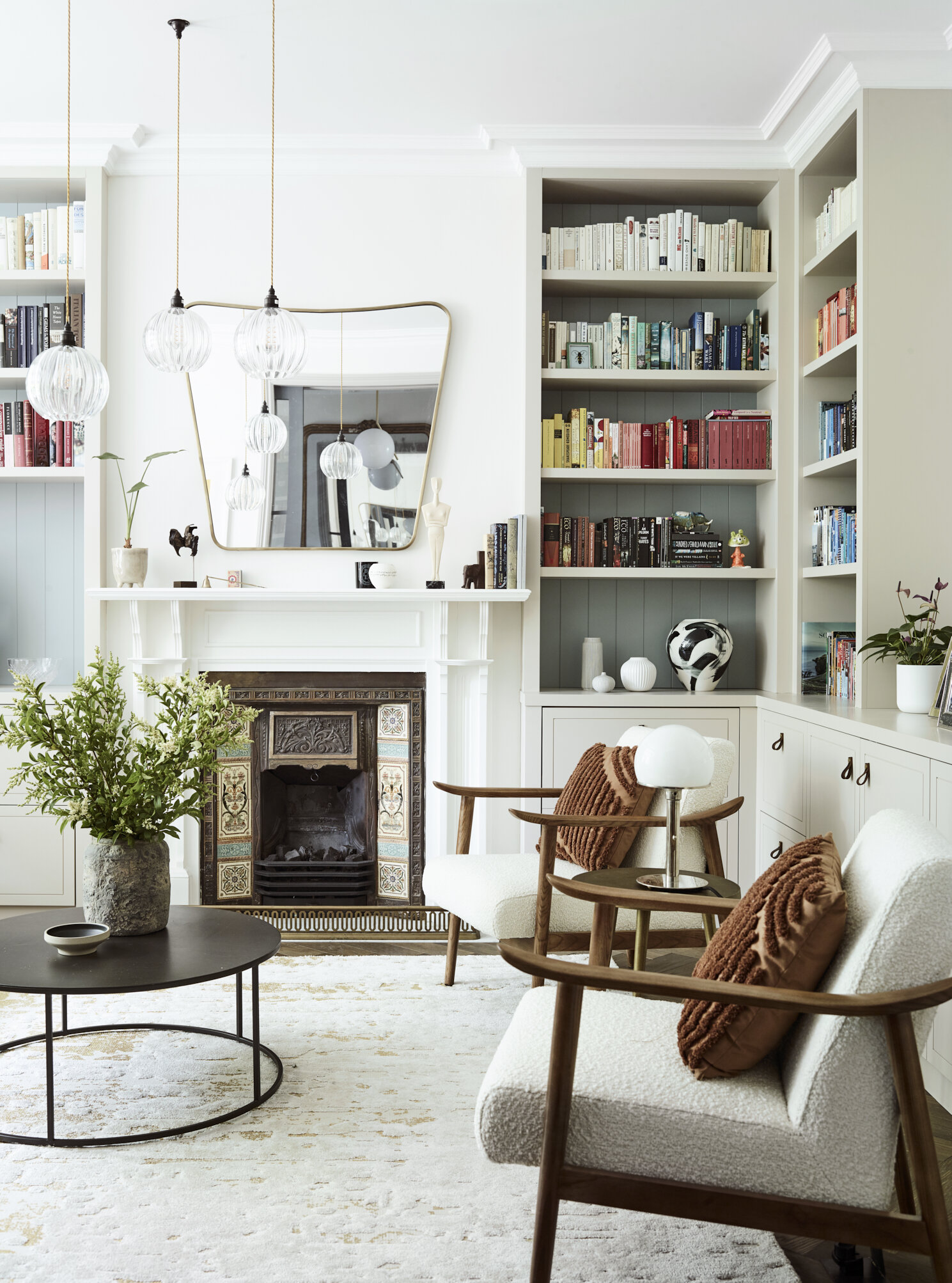
Our Eden House Reception room is lit by downlights, decorative pendant lights and LED lights in the joinery.
Lighting ideas for different rooms
Different spaces within the home benefit from different lighting approaches.
Bedrooms often work best with soft ambient lighting combined with bedside lamps or reading lights. Wardrobe lighting can also be helpful for practical use.
Bathrooms benefit from well-positioned task lighting around mirrors to avoid harsh shadows when shaving or applying makeup.
Kitchens typically require a combination of general lighting and task lighting over worktops or islands.
Living rooms often feel most comfortable with layered lighting — a mix of table lamps, wall lights, decorative pendants and accent lighting for artwork or shelving.
Creating a balanced lighting scheme
A well-designed lighting plan brings together functionality, atmosphere and energy efficiency.
At Pia Design, lighting is always considered early in the design process so that electrical layouts, architectural features and furniture arrangements work seamlessly together.
Thoughtful lighting helps interiors feel warm, welcoming and adaptable, supporting both everyday life and special moments at home.
If you are planning a renovation or redesign and would like help developing a considered lighting scheme for your home, we would be delighted to help.

Eden House - The Entrance hallway which is lit by pendant lights and wall lights - the mirror reflects the living room to bounce natural light.