
Solid vs Engineered Wood Flooring: Choosing the Right Wooden Floor for Your Home
Wooden flooring is one of the most timeless and versatile materials used in interior design. Whether in a period property or a contemporary home, timber floors bring warmth, character and natural texture to a space.
When choosing wood flooring, homeowners are usually deciding between solid wood flooring and engineered wood flooring. Both options offer the beauty of real timber but differ in construction, performance and cost.
In this guide we explain the differences between solid and engineered wood flooring, when each option works best, and what to consider when selecting wooden floors for your home.What Is Solid Wooden Flooring?
Solid wooden flooring is made of 100% real wood and is a popular choice amongst homeowners. It is available in a range of different woods, from oak and walnut to maple and cherry. This type of wooden flooring is durable and offers natural beauty and warmth to any space. The wooden boards are available in different widths and lengths, and you can choose from unfinished or pre-finished varieties. With a typical thickness ranging from 14mm to 22mm, it can be sanded and re-finished multiple times, also making it a good sustainable choice.
The installation process for solid wooden flooring is complex and requires a professional. It’s important to ensure that the subfloor is completely flat and level before installation, as this will ensure that the floor is even and free from any problems. It’s also important to note that solid wood flooring is not suitable for installation over concrete. If using underfloor heating, then solid wood flooring is not the best choice as it is more prone to expanding and contracting under temperature changes – over time, this can lead to gaps appearing between planks.
What is solid wood flooring?
Solid wood flooring is made from a single piece of natural timber, typically between 14mm and 22mm thick. Popular species include oak, walnut, maple and cherry.
Because the boards are entirely solid wood, they can be sanded and refinished multiple times over their lifetime, making them a durable and long-lasting flooring choice. Solid timber floors also develop a natural patina over time that many homeowners find particularly appealing.
However, solid wood flooring is sensitive to temperature and humidity changes. Timber naturally expands and contracts, which means solid boards are generally not recommended for use with underfloor heating.
Installation is also more restrictive. Solid wood flooring usually requires a timber subfloor and is not suitable for installation directly over concrete.
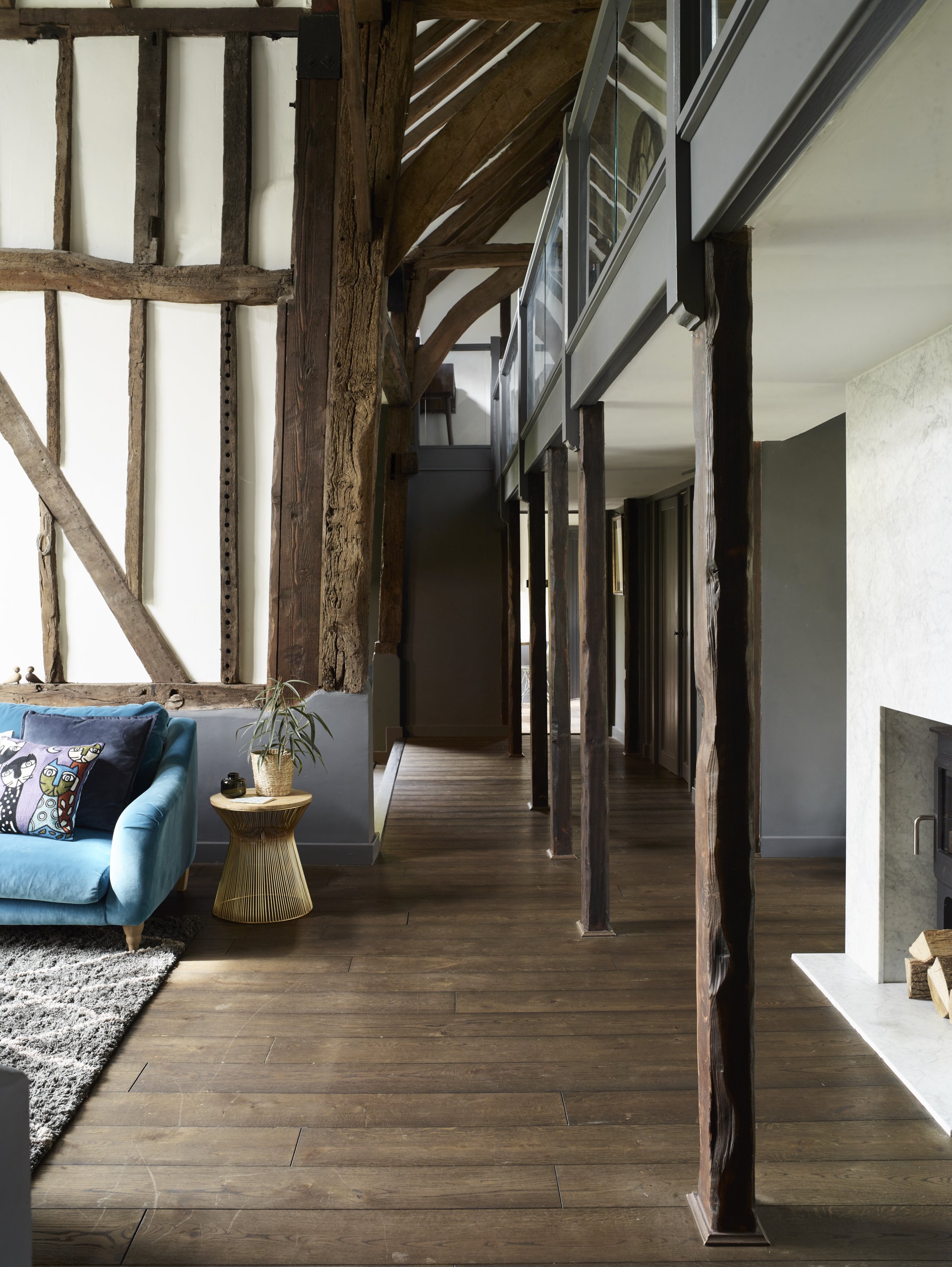
Engineered wooden flooring in our Blackberry Barn project.
What is engineered wood flooring?
Engineered wood flooring is constructed from several layers of wood bonded together. The top layer is a veneer of real hardwood, while the layers beneath are typically made from plywood or high-density fibreboard.
This layered construction makes engineered flooring more stable and resistant to temperature and moisture changes. For this reason, it is often the preferred option for modern renovations, particularly where underfloor heating is used.
Engineered flooring can also be installed over concrete subfloors, making it suitable for apartments, basements and ground-floor renovations.
Because the visible surface is still real wood, engineered floors offer the same natural appearance as solid timber. However, the thinner hardwood veneer means they can typically only be sanded and refinished a limited number of times.
Solid vs engineered wood flooring: which is better?
The right flooring choice depends on the property and the way the space will be used.
Solid wood flooring can be an excellent option in traditional homes where longevity and authenticity are priorities. Because it can be refinished many times, it can last for generations when properly maintained.
Engineered wood flooring, however, is often the more practical choice for modern homes. Its stability makes it compatible with underfloor heating and less prone to movement caused by humidity or temperature changes.
Engineered boards are also often more cost-effective, as a smaller amount of hardwood is used in their construction.

Herringbone engineered wooden flooring at our Eden House project.
Popular wooden flooring patterns
Beyond the type of timber used, the way flooring is laid can dramatically influence the character of a room.
Herringbone flooring
Herringbone is one of the most popular parquet flooring patterns. The boards are laid in a repeating zig-zag arrangement, creating a classic and timeless look that works particularly well in period properties.
Chevron flooring
Chevron flooring uses angled boards that meet at a sharp point, creating a continuous ‘V’ pattern. This style feels slightly more contemporary and can visually elongate a room.
Parquet flooring
Parquet refers to decorative patterns created from small blocks of wood. Traditional parquet floors are often supplied unfinished and then sanded, sealed or oiled after installation.
These patterns add texture and visual interest to a space while highlighting the natural beauty of timber.

At our Clement House project, these floor planks were sanded back from a dark stain and re-oiled in a light wash to match the new herringbone flooring in the dining room.
Cost Considerations
The cost of wooden flooring varies depending on the type of timber, the board construction and the complexity of installation.
Engineered flooring is often slightly more affordable because it uses less hardwood and can be quicker to install. Solid wood flooring tends to be more expensive due to the material and installation requirements.
Installation costs also vary depending on the pattern chosen. For example, herringbone or chevron layouts typically require more labour than straight plank flooring.
As with most aspects of renovation, it is worth investing in quality flooring that will last for many years.
Maintenance and care for wooden floors
One of the reasons wooden flooring remains so popular is that it is relatively easy to maintain.
Regular sweeping or vacuuming helps remove dust and grit that could cause scratches. Floors should occasionally be cleaned with a damp mop and a cleaner designed specifically for timber floors.
Spills should be wiped up promptly, but well-sealed wooden floors can work successfully in most areas of the home, including kitchens.
With proper care, timber flooring can last for decades and often becomes more beautiful as it ages.
A natural and enduring flooring choice
Whether solid or engineered, wooden flooring brings warmth, durability and natural beauty to a home. The choice between the two often comes down to the practical conditions of the space and the long-term performance required.
At Pia Design we frequently incorporate timber flooring into our projects because of its longevity and ability to create calm, timeless interiors.
If you are planning a renovation and would like advice on choosing the right wooden flooring for your home, we would be delighted to help.